Booking choice: The perfume masterclass at San Simone, from $77 per person. Check dates Tour details
A perfume is a blend of fragrant materials dissolved in alcohol. The skill is in choosing them and in the balance: how much of the fast, fresh notes, how much of the floral heart, how much of the slow, deep base. Professional perfumers spend years learning it. In a Florence workshop you get the same logic in an afternoon, with a perfumer to stop you over-pouring.
Below: how perfume is made, the notes pyramid, the 30/50/20 rule, the difference between cologne and parfum, why Florence cares so much about iris, how long it takes to train, how long a bottle keeps, and how to make yours last.
The quick answer
Perfume is made by blending fragrant materials (essential oils, absolutes, resins and aroma molecules) into alcohol. Perfumers build it in three layers: top notes you smell first, heart notes that follow, and base notes that last longest. Beginners often start from about 30% top, 50% heart and 20% base. The more fragrance in the alcohol, the stronger the type: cologne, eau de toilette, eau de parfum, parfum.
How is perfume made?
A perfumer chooses fragrant materials, measures them drop by drop into a concentrate, then dilutes it in alcohol. The concentrate decides the smell; the dilution decides the strength.
The raw materials fall into a few families:
- Essential oils, distilled or pressed from plants: bergamot and lemon peel, lavender, rosemary.
- Absolutes and concretes, extracted from delicate flowers and roots, such as rose, jasmine and orris butter from the iris root.
- Resins, sticky and warm, such as amber resin.
- Aroma molecules, made in the lab, which give many musks and clean notes.
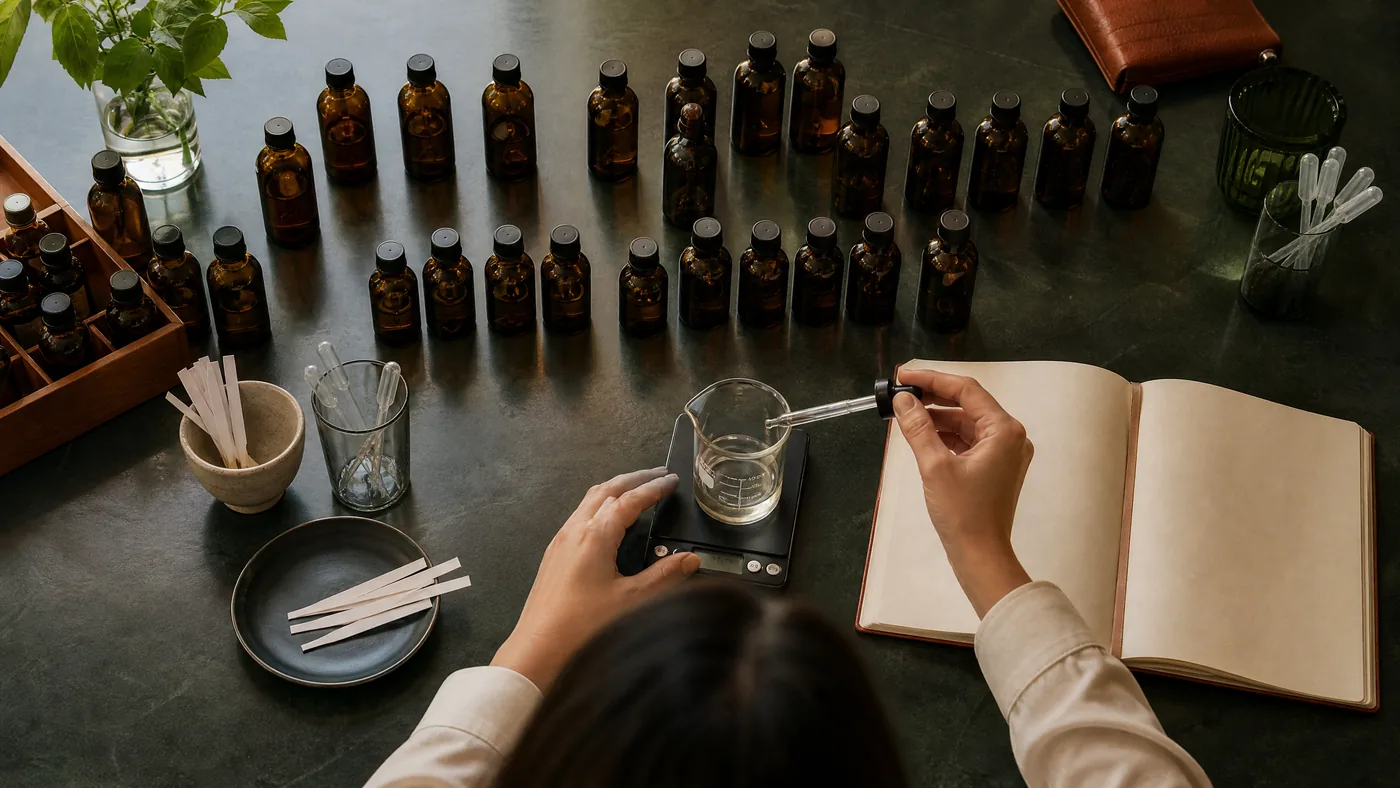
The concentrate is then mixed with alcohol, usually ethanol with a little water. Classes in Florence work with ready-made essences from a kit, so you do the creative part: the Lucca workshop, for example, puts about 30 raw materials in front of you, from essential oils and resins to flowers and molecules, and lets your nose decide.
What are top, heart and base notes?
Three layers of a perfume, sorted by how fast they evaporate. Top notes are smelled first and fade fastest, heart notes form the main body, and base notes are the slow, deep ones that stay longest.
Perfumers call this the fragrance pyramid. The idea goes back to the 19th century and was made popular by François Coty, says Wikipedia. Each layer has a job:
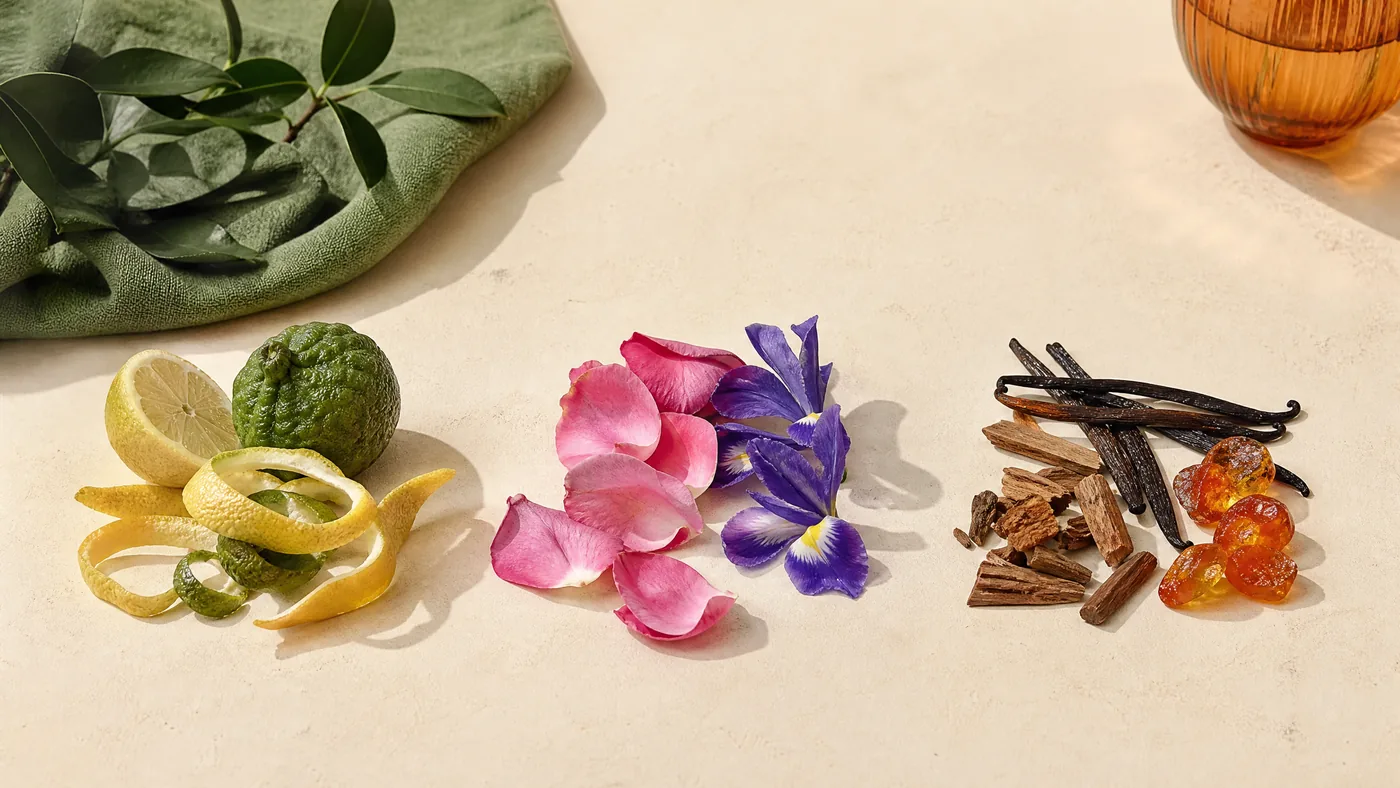
- Top notes make the first impression. Small, light molecules, fresh and sharp. Citrus and ginger are classic.
- Heart notes appear as the top fades and carry the main theme. Rounder, often floral: rose, lavender, iris.
- Base notes give depth and hold the lighter notes in place. Heavy molecules such as woods, vanilla and musk; some can still be noticed a day later.
The layers also change each other. A strong base alters how the top smells, which is why a perfumer always tests the full blend on a blotter strip, never one note at a time.
| Note | When you notice it | Typical ingredients | In a Florence class |
|---|---|---|---|
| Top (head) | First minutes | Bergamot, lemon, orange, ginger, herbs | The first blotter strips you sniff; bright and quick |
| Heart (middle) | After the top fades | Rose, jasmine, lavender, iris, orange blossom | The character of your perfume; most of the drops |
| Base | Longest, into the dry-down | Sandalwood, vanilla, patchouli, musk, amber, orris | A few drops that make it last |
Order of evaporation from Wikipedia's note on perfumery; ingredient examples from the class listings and fragrance experts quoted in Who What Wear.
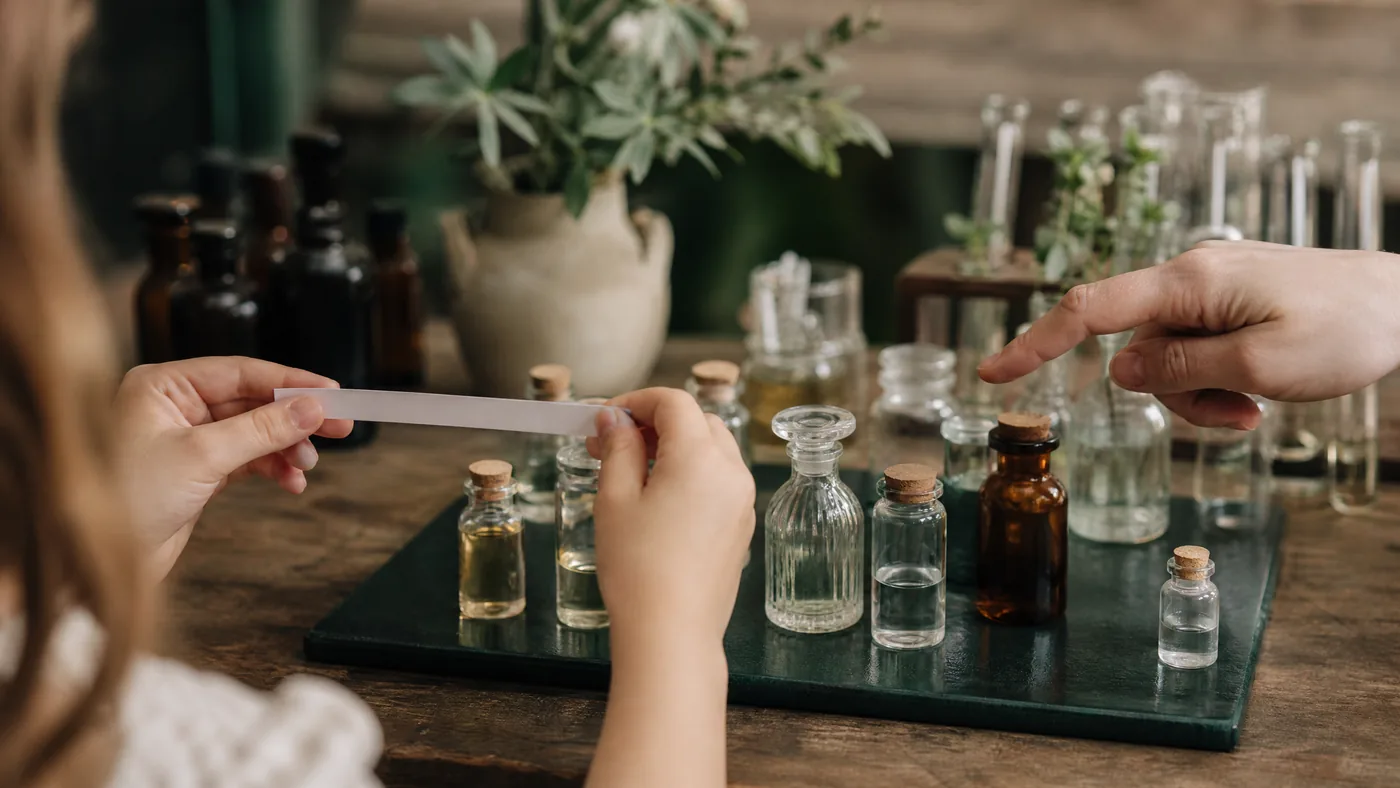
Put the pyramid into practice at San Simone: a master perfumer, a kit of top, heart and base essences, and your own 30 ml blend with its formula.
Check dates for the perfume masterclass at San SimoneWhat is the 30/50/20 rule for perfume?
A beginner's rule of thumb for balance: about 30% top notes, 50% heart notes and 20% base notes. It is a starting point, not a law, and real perfumes break it all the time.
The logic is simple. The heart is the character of the perfume, so it gets the biggest share. The top is the greeting and fades fast, so it needs enough to be noticed. The base is powerful, so a little goes a long way, and too much makes a blend heavy.
Citrus colognes lean much harder on the top. Warm, woody perfumes give the base more. That is why the workshops guide the proportions for you rather than handing over a formula. Herbasalus describes it as dosing the top, heart and base until the blend is harmonious, and at San Simone the team adjusts the drops with each guest.
In class it looks like this: you pick a few favorites in each layer, the perfumer suggests how many drops of each, you test on a blotter strip, then you adjust. Write down every change; that list becomes your formula.
What is the difference between eau de cologne, eau de toilette, eau de parfum and parfum?
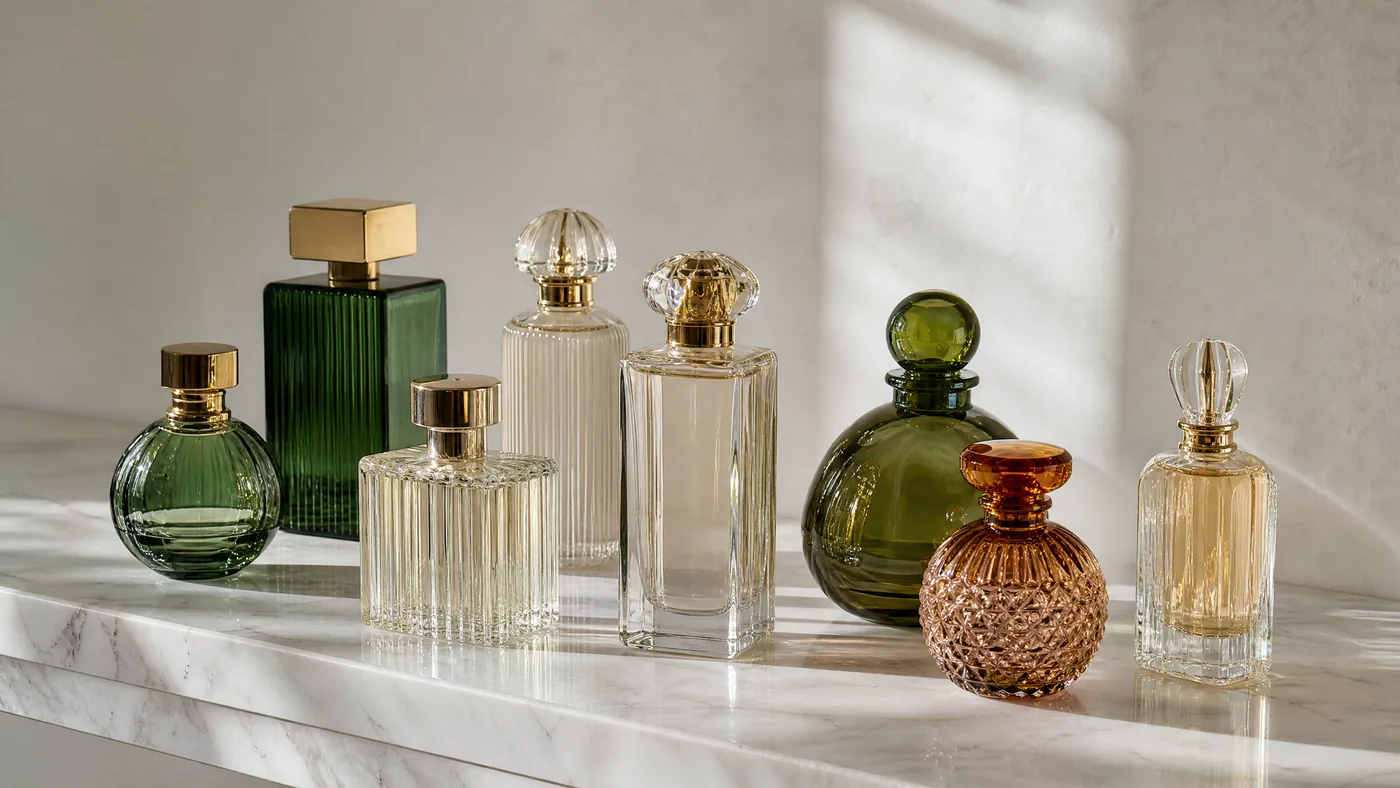
The share of fragrance in the alcohol. Eau de cologne has the least, then eau de toilette, then eau de parfum, and parfum (or extrait) has the most.
From lightest to strongest:
- Eau de cologne. Light and fresh. The first colognes were blends of citrus oils such as lemon, orange and bergamot, with lavender and neroli.
- Eau de toilette. A little more concentrated, an everyday strength.
- Eau de parfum. Richer and longer lasting.
- Parfum or extrait. The most concentrated and the most expensive per milliliter.
Brands set their own exact ratios, so two eaux de parfum can differ a lot. The name tells you the direction, not a fixed number.
In Florence you can choose. The Feel Toscana workshop lets you make either a perfume or a cologne in a 30 ml bottle, a nice choice if you want something fresh for summer.
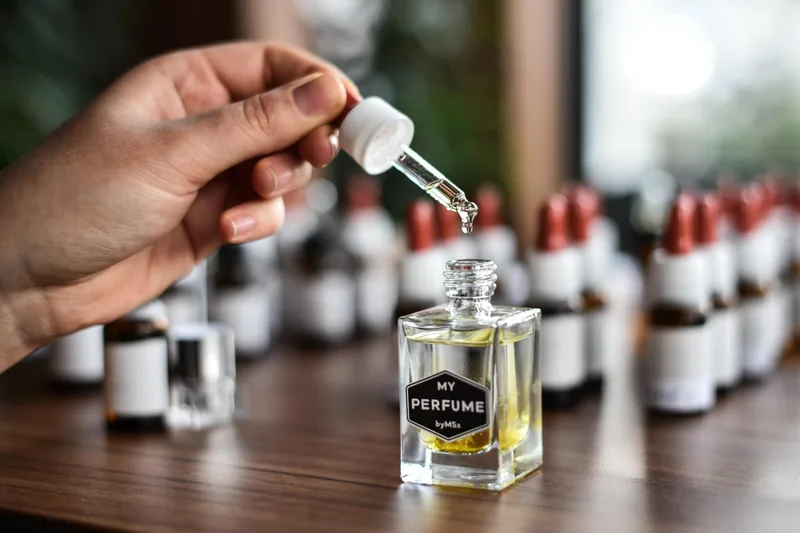
Perfume or cologne, your call: a small studio on Via del Sole, professional raw materials, a notebook for your recipe and a 30 ml bottle to take home.
Explore the perfume and cologne workshop Tour detailsWhy is iris so important in Florentine perfume?
Because the iris is the symbol of Florence, and its dried root, orris, is one of the most precious materials in perfume. Tuscany still grows it in the Chianti and Pratomagno hills.
The iris has been Florence's symbol since 1251, says the Tuscany Region. Perfumers care about the root. Orris comes from Iris pallida and Iris germanica, and it smells nothing like the flower: after long drying it turns soft, powdery and violet-like.
Making it is slow. A 2025 study in the journal Agronomy on orris in Tuscany says the plants are harvested after two to four years, the rhizomes are dried and then left in sacks in dark rooms for at least 36 months, and the whole process takes six to eight years. Wikipedia notes that one ton of root gives about two kilos of oil, which makes orris butter one of the most expensive materials in the industry.
In a blend, orris works as a base note and a fixative, holding lighter notes in place. Look for iris in the essence kits in Florence; it is the most Florentine drop you can add. Spring visitors can see the flowers in the Giardino dell'Iris by Piazzale Michelangelo.
How long does it take to learn perfumery?
Years. Perfumer courses run from several months to five years at a school or a fragrance house, and most professionals keep learning on the job. A Florence class gives you the basics in one to two hours.
Is it hard to become a perfumer? Courses are, in the words of the French perfume magazine Nez, "often complementary, sometimes expensive, almost always very selective", and many ask for a science degree first. A professional perfumer is often nicknamed a "nose".
What is the best perfumery school in the world? There is no official ranking, but three French names come up first:
- ISIPCA in Versailles, founded in 1970 by Jean-Jacques Guerlain, with master's programs of two to three years.
- The Grasse Institute of Perfumery, in the French perfume capital, with a technical degree in fragrance creation.
- The Ecole supérieure du parfum in Paris and Grasse, with five-year programs.
The big fragrance houses also train their own: Nez says Givaudan's school takes about three students a year for four years. San Simone runs an online course in artistic perfumery for anyone who wants to go further after a class.
Learn the basics in an afternoon: a master perfumer at San Simone walks you through the notes, then you blend your own 30 ml perfume.
Check dates for the perfume masterclass at San SimoneHow long does perfume last, and can it expire?
Yes, perfume slowly goes off. Most fragrances keep about three to five years once opened, longer if stored well. A sour or metallic smell or a darker color means it is past its best.
The UK retailer The Perfume Shop gives three to five years as a general rule, with unopened bottles lasting longer. Sunlight, heat, damp and air wear the fragrance down, which is why storage matters.
How to store it:
- A cool, dark place with a steady temperature: a drawer or a wardrobe, not a sunny shelf.
- Not in the bathroom, where heat and damp come and go.
- Cap back on after every use, and keep the box.
Can I use a 10 year old perfume? Smell it on a strip of paper first. If the opening is still fresh and the color has not darkened much, it is fine to enjoy. If it smells vinegary, sharp or flat, it is time to throw it away.
A workshop perfume is fresh on the day you make it. Keep the formula: at San Simone and Feel Toscana you can reorder the same blend later. More in the best perfume class in Florence.
How do you make perfume last longer, on skin or clothes?
Choose a blend with more base notes, spray instead of rubbing, and consider a light mist on clothing, which holds scent longer than skin. Test delicate fabric first.
Does perfume last longer on skin or clothes? Usually on fabric. Estee Lauder says fabric can hold scent longer than skin, but some formulas stain delicate fabrics, so test a hidden spot first.
What helps a perfume last:
- The formula. David Moltz, founder of D.S. & Durga, told Who What Wear that musks and woody ambers last the longest. In class, add a little more base: sandalwood, vanilla, musk, orris.
- Do not rub your wrists. Estee Lauder advises letting the scent settle on its own.
- Reapply. A small 15 ml or 30 ml bottle fits a handbag for a top-up.
- Store it well, as above: a tired perfume fades faster.
What is the Vaseline trick? A tip shared widely on social media and in beauty magazines: dab a little petroleum jelly where you spray, so the scent has something to cling to. People swear by it; we pass it on as a popular tip, not a tested method.
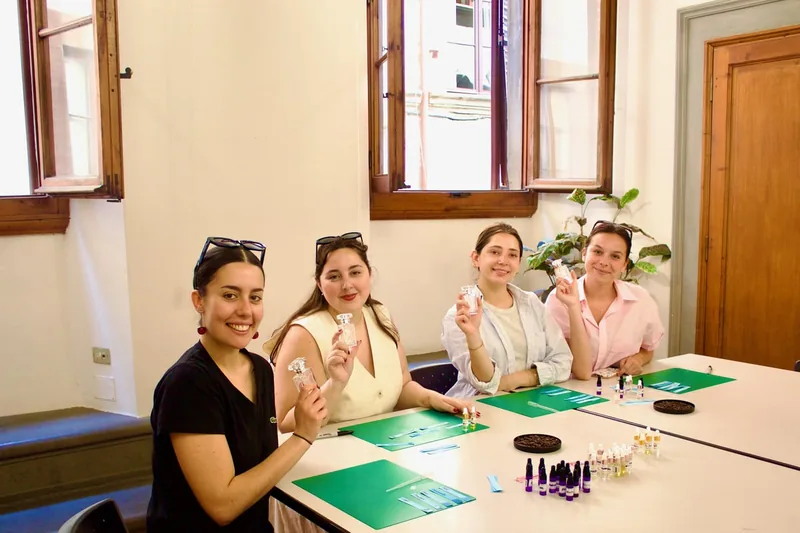
A short small-group class near Santa Croce: natural essential oils, florals and spices, and a 15 ml bottle of your own perfume that fits any handbag.
Explore the signature scent workshop Tour detailsFrequently asked questions
Which note do you smell first in a perfume?
The top notes, such as citrus and ginger. They evaporate fastest, so after the first minutes you smell the heart, and later the base.
What is a professional perfumer called?
A perfumer, often nicknamed a "nose" (nez in French). Salotto21 describes its class as working like a perfumer, a nose, exploring the main raw materials.
Is perfume or cologne stronger?
Perfume. Eau de cologne has the lowest share of fragrance oils, then eau de toilette, then eau de parfum and parfum.
Can I take my workshop perfume in hand luggage?
Yes. The 15 ml and 30 ml workshop bottles fit the standard EU cabin rule of containers up to 100 ml in one clear one-liter bag.
Ready to book
Choose your class
Free cancellation up to 24 hours before on every option. Prices are from-prices in USD and move with the season.
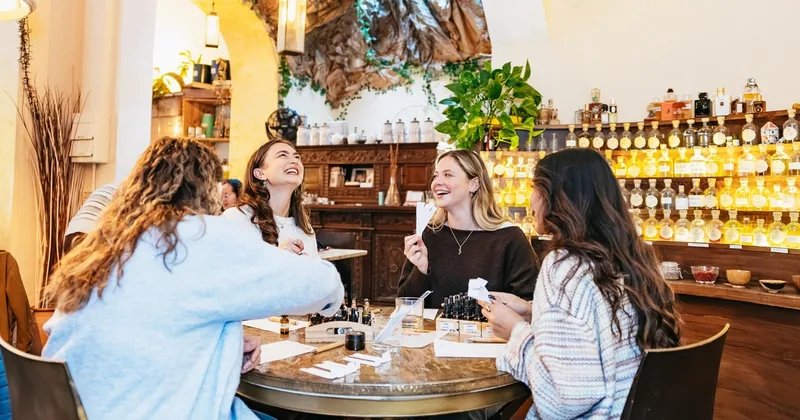
Perfume Masterclass at San Simone
- Masterclass in an artisan laboratory
- Master perfumer instructor
- Your own perfume in a 30 ml bottle
Perfume & Cologne Creation Workshop
- Professional perfume ingredients and equipment
- Guidance from an experienced perfumer
- Your own perfume or cologne in a 30 ml bottle
Create Your Signature Scent
- Introduction to Italian perfumery
- Expert perfumer guiding you
- Essential oils, florals, spices and herbs